Definition
What is asbestos?
A mineral fibre, not a paint colour. It is hazardous when fibres are released and inhaled — which is why this site never tells you to remove it yourself.
- What it is
- Mineral fibre
- Historic products
- 3,000+
- National ACM ban
- 31 Dec 2003
- Standing advice
- Never DIY
Asbestos is a group of naturally occurring silicate mineral fibres that were manufactured into more than 3,000 products in Australia. Breathing those fibres can cause asbestosis, lung cancer and mesothelioma. There is no known safe level of exposure. If you suspect it in a home, engage a licensed asbestos professional — do not cut, drill, sand or bag it yourself.
Definition
Asbestos. Naturally occurring silicate mineral fibres (including chrysotile, amosite and crocidolite) that were added to cement, vinyl, insulation and other building products. Confirmation is a laboratory result, not a photo.
Direct answer
Asbestos is a mineral fibre that Australia put into everyday building products. It is not a brand of paint and it is not something you identify from a phone photo. When fibres are released and inhaled they can cause serious disease decades later. That is the whole safety case for leaving suspect sheet alone.
This path — /what-is-asbestos/ — is the historic definition URL on asbestosremoval.com.au. The longer risk-in-homes explainer lives at about asbestos. The room-by-room map lives at asbestos in my home. Use this page when you need the substance named correctly before anyone talks about a renovation.
What the word actually names
In geology, asbestos is a commercial label for several fibrous silicate minerals. The three names you will hear in Australian public guidance are chrysotile (often called white), amosite (brown) and crocidolite (blue). Colour folklore is not a risk ranking you can use on a fence, an eave, or a bathroom wall. All regulated types are hazardous when respirable fibres are released and inhaled.
Those fibres are extremely fine. The hazard is not the intact sheet sitting still on a shed. The hazard is dust that can be breathed. That is why Safe Work Australia treats work likely to disturb asbestos as high-risk construction work, and why this site’s standing sentence is always the same: engage a licensed asbestos professional.
Bound fibre versus airborne fibre
Manufacturers mixed asbestos into cement, vinyl, insulation, gaskets, textured coatings and more than 3,000 product types sold in Australia. In a house you usually meet the result as asbestos-containing material (ACM): a board, a tile, a flue, a fence paling, a corrugated roof.
Friable ACM can be crumbled, pulverised or reduced to powder by hand when dry. Fibres release easily. Only a Class A licensed removalist should touch it.
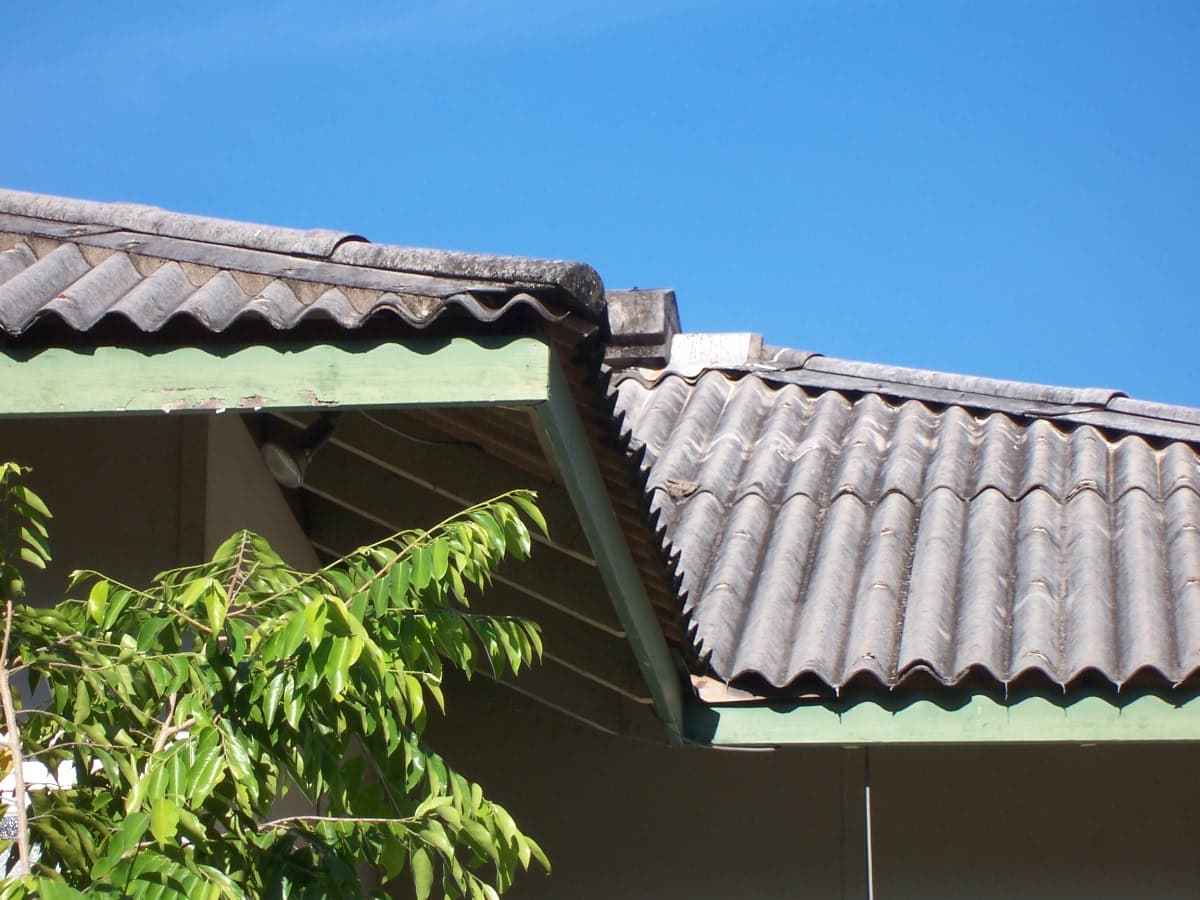
Non-friable (bonded) ACM holds fibres in a matrix such as cement or vinyl. Intact bonded sheet is generally a lower immediate risk until someone cuts it, drills it, sands it, drops it, or hits it with a high-pressure hose. Weathered roofing and broken fence palings sit in a grey zone. They are still a licensed job. They are not a Saturday experiment.
This page defines the fibre. It does not give you a method for taking a sheet down. The process outline lives on licensed asbestos removal.
What asbestos is not
It is not a single colour. Painted Hardiflex, grey Super Six, cream Versilux and scored “timber” Hardiplank can all hide the same mineral family. Later cement products were made without asbestos. A lookalike is not a clearance.
It is not a diagnosis from a photograph. The historic guide what does asbestos look like (the 2018 archive URL /2018/12/17/what-does-asbestos-look-like/ still 301s there) exists to kill that myth. Confirmation is a NATA-accredited laboratory arranged by a competent person. See asbestos testing.
It is not “safe because it is white” or “urgent because it is blue”. Do not use colour stories to decide whether to disturb a material.
It is not a household waste stream. Broken pieces do not belong in a general skip. Disposal is a licensed pathway, explained at asbestos collection and disposal.
The Australian manufacturing story, in one page
Australia was a heavy user. Cement sheet — sold under names many tradies still recognise, such as Super Six, Hardiflex, Hardiplank, Versilux and Tilux — was cheap, light and everywhere from the 1940s through the 1980s. Manufacturing of many products wound down in the 1980s. The complete national prohibition on new asbestos-containing materials arrived on 31 December 2003.
That date stopped new manufacture, import and use. It did not empty roofs, eaves, fences or wet-area walls already in place. Existing ACM can remain if it is stable and left alone. “Stable” is a competent-person call, not a social-media call. The Asbestos Safety and Eradication Agency publishes householder guidance for that reason: the fibre is still in the building stock.
If your question has already moved from “what is the word” to “what could be in this house”, stop reading the definition and open about asbestos. If you are staring at a particular room, start with asbestos in my home.
Health, without a diagnosis
Inhaled fibres can cause asbestosis, lung cancer and mesothelioma. Latency can be decades. There is no known safe level of exposure. We are not clinicians. If you think you have been exposed, talk to your GP and read the health pages on your state asbestos site. Do not use this definition page as a diagnosis, a prognosis, or a reason to start demolition.
The practical implication is simple. Do not create dust to “check”. Do not bag a souvenir sample. Do not treat a 10 m² state exception as a how-to. Some jurisdictions describe limited exceptions for small amounts of non-friable ACM; the ACT requires a licence for any removal. This site mentions those exceptions only to reject them as a DIY brief. Engage a licensed asbestos professional.
What the ban did — and what it left for you
The national prohibition of 31 December 2003 is the date to remember. Installed materials can remain until a licensed professional manages them. That is not permission to ignore damage. It is not permission to water-blast eaves “to freshen them for sale”. It is a statement that the legal clock on new ACM stopped, while the physical stock did not vanish.
WHS duties sit with people who manage workplaces and with licensed removalists. A house can become a workplace the moment you hire a contractor. Licence checks belong on the state register, not on a van decal. This site will not invent a licence number or issue a clearance certificate.
If you only needed the definition
You now have it. Asbestos is a group of mineral fibres, used in more than 3,000 Australian products, hazardous when airborne, banned as new ACM from 31 December 2003, and still present in a great deal of pre-1990 fabric. The next page depends on your question:
- Risks in the home after the definition — about asbestos
- Where it usually hides — asbestos in my home
- Wet areas — asbestos in the bathroom
- Evidence — asbestos testing
- Licensed process — asbestos removal
- Short answers — FAQ
If a renovation is already booked, pause the demolition. Request a licensed assessment via contact us ([email protected]). Describe the suburb and what you can see without touching it.
Official reading
- Safe Work Australia — asbestos
- WHS duties
- ASEA
- State starting points: NSW, Victoria, Queensland, WA, SA
- Longer explainer: about asbestos
Compare
The two questions this page answers
| Topic | What it is | What you should do |
|---|---|---|
| Material | Mineral fibres bound into cement, vinyl, insulation or coatings. | Treat suspect fabric as ACM until a lab says otherwise. |
| Hazard | Airborne respirable fibres — not the intact sheet sitting still. | Do not create dust. Engage a licensed asbestos professional. |
| Ban | New ACM work banned from 31 December 2003. | Existing materials can remain until professionally managed. |
| Friable vs bonded | Friable crumbles by hand; bonded is locked in a matrix until broken. | Class A for friable. Class A or B for non-friable. Still not DIY. |
Questions
Questions people actually ask
A group of mineral fibres used in Australian building products until the late 20th century. It is hazardous when fibres become airborne and are inhaled.
If the definition made a renovation look different
Leave the material alone. Read the home guide, then request a licensed assessment.