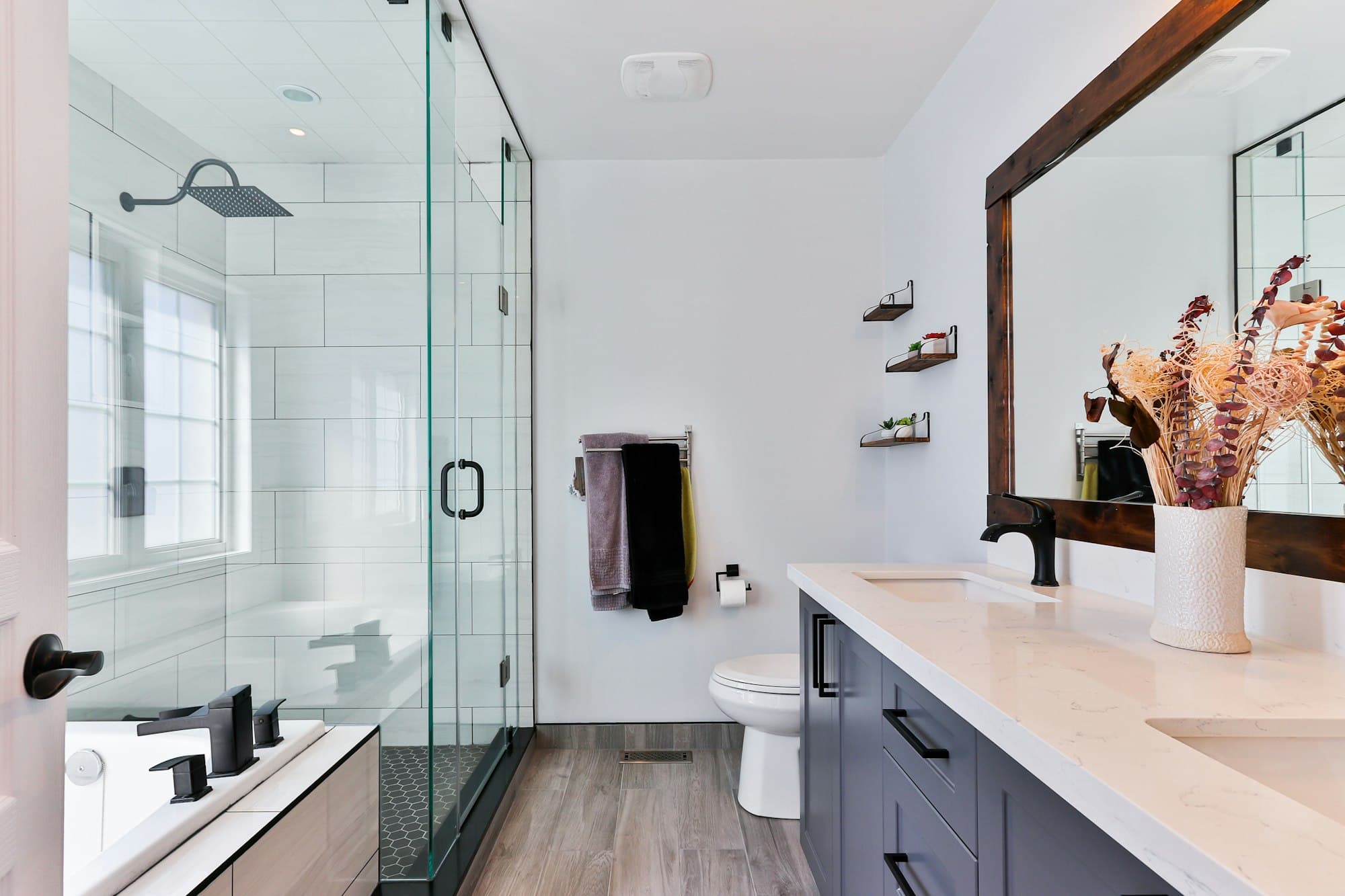
Wet areas
Asbestos in the bathroom
The most renovated room in a pre-1990 house is also one of the most likely to hide bonded ACM.
- Typical sheets
- Walls & ceilings
- Floors and backing
- Vinyl
- Likelihood window
- Pre-1990
- Strip-out rule
- Licensed only
Yes — bathrooms in Australian homes built or renovated before 1990 commonly used asbestos-cement wall and ceiling sheets, vinyl floor tiles or sheet vinyl with asbestos backing, splashbacks and bath panels. Do not start a strip-out. Engage a licensed asbestos professional to assess and, if needed, remove the materials.
Definition
Wet-area ACM. Asbestos-containing linings used where water is present — bathrooms, laundries and toilets — usually as bonded cement sheet or vinyl. Damage from leaks can worsen fibre release.
Why bathrooms keep appearing on this domain
Historic articles on asbestosremoval.com.au kept returning to wet areas because that is where homeowners renovate first. Cement sheet took paint and tiles. Vinyl hid a concrete slab. None of those finishes announce themselves as asbestos.
The 2019 archive question — was asbestos used in bathrooms? — is answered in the first sentence of this page. That URL /2019/01/23/was-asbestos-used-in-bathrooms/ still 301s to was asbestos used in bathrooms. The 2018 look-like question is answered on what asbestos looks like.
This hub stays in the wet area. For the rest of the house use asbestos in my home. For the mineral itself use what is asbestos.
Typical wet-area products
Public householder material, including Queensland’s 1970s house diagram and ASEA guidance, keeps returning to the same list:
- Flat cement sheets on walls and ceilings (sometimes recessed for flush joints) — Versilux is a name you will hear
- Cement sheet behind ceramic tiles
- Bath side-panels
- Vinyl tiles (often 9-inch) and sheet vinyl with felt backing
- Compressed sheet on wet floors in some laundries
- Splashbacks beside basins and in toilets
Product trade names are clues, not certificates. Later villaboard-style sheets were made without asbestos. Paint, tiles and decades of steam hide everything. Confirmation is a NATA laboratory arranged by a competent person — asbestos testing.
Laundries and toilets belong in the same pause. If the room gets wet and the fabric is pre-1990, treat linings as suspect until tested.
Leaks change the conversation
Water damage can deteriorate bonded sheet. A leaking shower, a failed membrane or a slow pipe behind a bath panel can turn a tidy lining into something closer to friable. Keep the area closed to children and pets. Do not chisel the wall open “to find the leak” through suspect sheet. A plumber who has not seen an asbestos assessment should not start opening wet-area walls in a pre-1990 house.
Intact bonded linings with no work planned are a different risk from a soft, stained panel. Only a licensed professional should make that call. Do not disturb the lining to check. See is asbestos safe if undisturbed.
The sequence we will endorse
- Stop. Do not start demolition. Do not book a skip for “the old bathroom”.
- Engage a licensed asbestos professional.
- Sample through a NATA-accredited laboratory if the assessor requires it.
- If ACM is confirmed and must go, use a licensed removalist with the right class of licence — typically Class A or Class B for bonded sheet, Class A if the material has become friable.
- Only then let a builder open the room.
That order is the whole wet-area rule. A delayed renovation is cheaper than a contaminated house. We will not publish how to prise tiles, how to pop a bath panel, or how to wrap debris. Some states describe a 10 m² non-friable exception; we mention it only to reject it as a homeowner strip-out plan. The ACT requires a licence for any removal.
Refresh versus strip-out
Swapping a tap, a mirror or a toilet seat is not the same job as gutting the room. Even a “surface refresh” becomes a disturbance if you sand walls, grind tiles, or scrape vinyl. Cosmetic work is not a free pass on the lining. If any substrate may be ACM, get advice first.
A full strip-out almost always disturbs linings. Assume ACM until tested. Licensed asbestos removalist, then a builder — in that order. Read asbestos removal for Class A / Class B, notification, waste and clearance. This site does not issue clearance certificates and does not quote prices.
Vinyl and adhesive
Vinyl tiles and some sheet-vinyl backings and adhesives in pre-1990 houses can contain asbestos. Do not sand or scrape them to “key” a new floor. Do not heat-gun a corner. Floor work in a bathroom or laundry is part of the same licensed conversation as the walls.
If a builder is already booked
Pause the strip-out until a licensed assessor has spoken. Show them this page and the Safe Work Australia asbestos topic. WHS duties apply once the house is a workplace. ASEA is the householder companion.
Send the suburb and what you can see without touching it via contact us or [email protected]. Adelaide wet-area notes sit with the historic capital hub asbestos removal Adelaide and asbestos testing Adelaide.
Builders, tilers, and the order of trades
A bathroom quote that starts with “we’ll demo on Monday” is the wrong order in a pre-1990 house. Tilers, waterproofers and plumbers each have a reason to open the lining. None of those reasons overrides a licensed asbestos assessment. Show the builder Safe Work Australia and ask them to wait. If they have already opened a wall, keep the room closed, keep children out, and bring in a licensed professional rather than “finishing the demo” to tidy up.
Second bathrooms, ensuites added in the 1970s, and laundry-through rooms are the usual surprise. The front rooms of a bungalow can be plaster while the wet area is Versilux. Do not let a single negative sample from a bedroom ceiling clear the shower. Scope follows the assessor.
Mould treatments, silicone refreshers and “we’ll just recaulk” jobs are fine until the tool starts cutting sheet. If the caulk sits on suspect cement, treat the cut as a disturbance. Hire a licensed asbestos professional before anyone opens a chase.
Official reading
Leaks, mould and the urge to open a wall
A leaking shower makes bonded sheet look urgent. Urgency is not a demolition licence. Water can deteriorate a lining and raise the chance of fibre release if someone then chisels the wall. Keep the room closed to children and pets, catch the leak if you can do so without breaking linings, and engage a licensed asbestos professional. Do not treat mould as proof of asbestos, and do not treat a dry wall as proof of safety.
Tile adhesive, waterproofing membranes and the sheet behind the tiles are different products with different ages. A 2008 vanity in a 1974 wet area does not make the substrate modern. The assessor samples what you are about to disturb — not the tapware you bought last week.
Compare
Bathroom refresh versus strip-out
| Topic | Surface refresh (paint, fittings) | Full strip-out |
|---|---|---|
| Disturbance | Still a risk if you sand walls or prise tiles. Get advice first. | Almost always disturbs linings. Assume ACM until tested. |
| Who should do it | A licensed professional if any lining may be ACM. | Licensed asbestos removalist, then a builder — in that order. |
| This site’s advice | Do not DIY the lining. Cosmetic work is not a free pass. | Never a homeowner demolition. |
Questions
Questions people actually ask
Yes. Cement wall and ceiling sheets, vinyl flooring, splashbacks and bath panels were common in pre-1990 Australian wet areas.
Bathroom booked with a builder already?
Pause the strip-out until a licensed assessor has spoken. A delayed renovation is cheaper than a contaminated house.