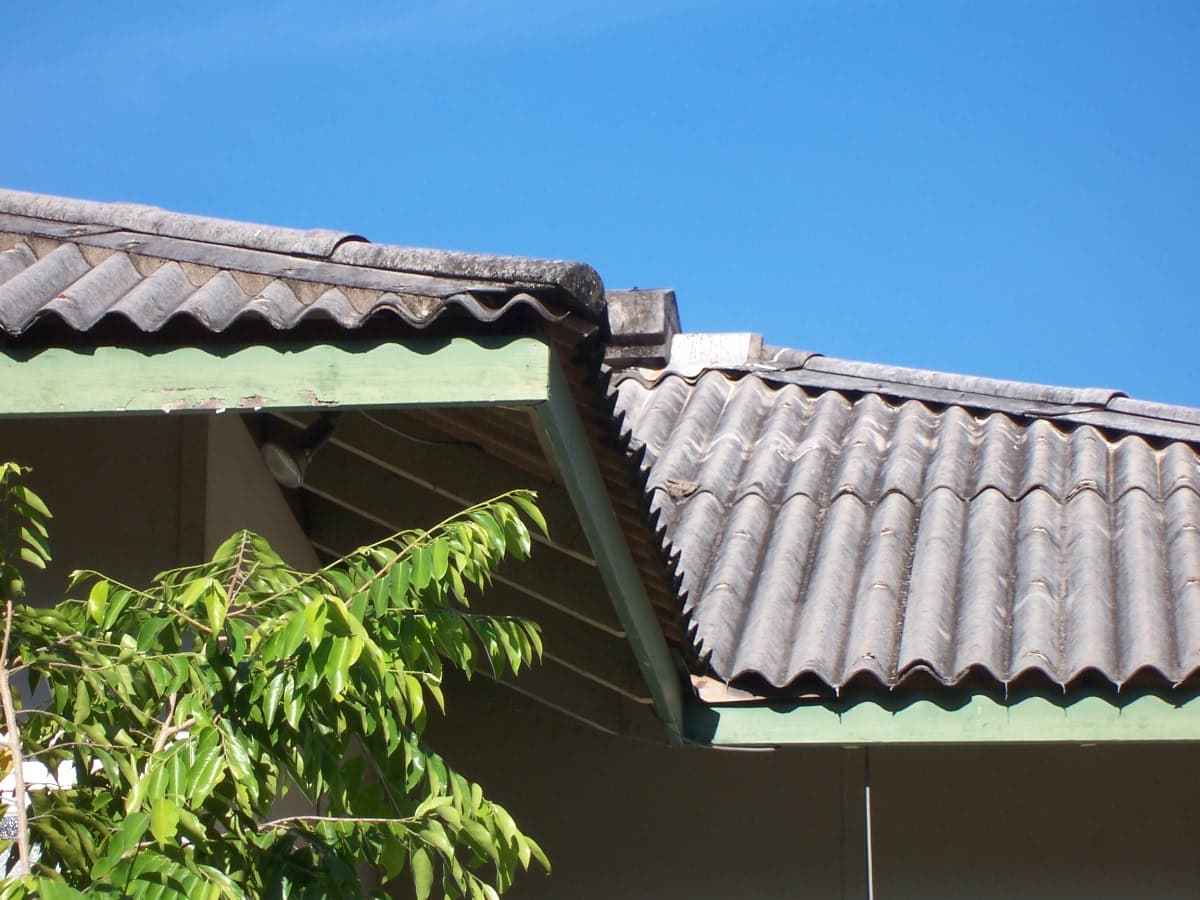
Roofs
Asbestos roof removal
Corrugated cement sheet is bonded until someone breaks it, walks it, or cleans it with a high-pressure hose.
- Typical profile
- Corrugated
- Until it breaks
- Bonded
- Licence (if non-friable)
- Class A or B
- Cleaning rule
- No water blast
Many Australian roofs and sheds still carry corrugated asbestos-cement sheeting, often sold historically as Super Six. Removal is licensed work. Do not walk, cut, or water-blast a suspect roof. Engage a licensed asbestos professional.
Definition
Super Six. A widely used trade name for corrugated asbestos-cement roof sheeting. Similar profiles were made without asbestos later — only a laboratory can tell them apart.
Direct answer
Engage a licensed asbestos professional. Corrugated cement roofs on pre-1990 buildings are a classic ACM location. Replacement is not a cash job for a mate with a ladder.
This hub is about Super Six and its cousins — the corrugated asbestos-cement roofs that still sit on Australian houses, sleep-outs, carports and farm sheds. It is not a walk-sequence. It is not a cutting pattern. It is not a “wet-down with a garden hose” tutorial. Those belong in the code of practice used by licensed removalists, not on a homeowner blog.
What Super Six is — and what it is not
Super Six is a widely used trade name for corrugated asbestos-cement roof sheeting. Similar profiles were manufactured later without asbestos. Age, corrugation and a grey look raise suspicion. They do not confirm anything. Only a licensed assessor and a NATA-accredited laboratory can tell a historic ACM sheet from a later lookalike. See asbestos testing.
The mineral definition lives at what is asbestos. The household risk story lives at about asbestos. Here the question is narrower: a roof that people are tempted to walk, clean, paint or rip off before a sale.
Why roofs go badly
Roofs are high, brittle, and tempting to “clean up” before sale or before a solar quote. Three habits turn bonded sheet into a contamination event:
Walking it. Corrugated cement was never a dance floor. Foot traffic cracks ridges and punches holes. Debris then sits in gutters and on the ground below.
Water-blasting. High-pressure water shreds the surface and spreads fibres across the yard, the neighbour’s fence and the stormwater line. Do not water-blast a suspect roof. Do not water-blast the eaves that meet it. This site will repeat that sentence on every lining page because it is one of the most common amateur mistakes.
Grinding, cutting or “just taking a few sheets off”. A Super Six roof is typically non-friable asbestos-cement — Class A or Class B licensed work — unless damage has made it friable. You do not decide the class from the driveway. The removalist decides with the assessor. Read licensed asbestos removal.
Gutters can hold residue even after a later, non-asbestos roof is fitted. Queensland public material notes that point. A shiny new profile does not automatically clean the boxes beneath it. Mention residue to the licensed person. Do not scoop it with a household shovel.
What a licensed roof job usually involves
A process outline, not a method you can copy:
- Assessment and, if needed, laboratory confirmation — not a photo.
- Licence class checked with the state regulator (SafeWork NSW, WorkSafe Victoria, WHSQ, WorkSafe WA, SafeWork SA, or equivalent).
- Notification where the WHS rules require it.
- Removal and packaging by the licensed removalist — not a cash job off the side of a ute.
- Disposal at an approved facility. See asbestos collection and disposal.
- Clearance where required. This site does not issue clearance certificates.
We do not publish prices. Height, access, fragility, waste bookings and whether the sheet has become friable all move the quote. Ask the licensed removalist.
Painting is not a DIY control
People ask whether they can spray-paint an old cement roof instead of replacing it. Paint on a sound, professionally assessed roof can be part of a competent-person’s management plan. Paint on a cracked, walked or water-blasted sheet is not a homemade encapsulation. If the sheet is damaged, get a licensed professional. Do not use a 10 m² non-friable exception — mentioned here only to reject it — as a reason to start unscrewing sheets from a ladder.
Related fabric you will meet at the same time
Eaves and barge linings often match the era of the roof. Do not drill them for lights while you wait for a roof quote. See asbestos walls and eaves. Fences and sheds on the same block may be the same product family. City housing notes start at asbestos removal Adelaide and the other capital hubs.
If solar installers, roof restorers or “we’ll just tidy the gutters” crews want to start before an assessor has spoken, pause them. Send the suburb and a description — not a chunk of sheet — via contact us or [email protected].
After a storm, a fire, or a failed “restoration”
Hail, fallen branches and bushfire can change a bonded Super Six roof from a leave-it-alone lining into a debris field. Keep people off the roof and out from under broken sheets. Do not sweep fragments into a household bin. Ask a licensed asbestos professional — and, if the sheet has crumbled, expect a Class A conversation rather than a casual Class B assumption.
“Restoration” crews who offer to seal, spray or resin-coat a suspect roof without an assessment are selling a finish, not a control. A competent person may later choose encapsulation as a management option. A flyer in the letterbox is not that person. If someone has already water-blasted the corrugations, treat the yard, the gutters and the downpipes as part of the problem you describe to the licensed removalist — still without scooping residue yourself.
Farm sheds, sleep-outs and carports use the same product family as the house roof. One laboratory result on the dwelling does not clear the shed. One negative shed sample does not clear the house. Scope follows the assessor, not the cheapest square metre. If a solar company needs penetrations through a suspect overhang, that is an eaves conversation as well as a roof conversation — send both details to the licensed person before anyone books a crane.
Official reading
- Safe Work Australia — asbestos
- WHS duties
- ASEA
- asbestos.qld.gov.au — useful on roofs, gutters and product names
- NSW · Victoria · WA · SA
Roofs after the sheets are gone
Gutters, downpipes, ceiling cavities and the soil at the drip line can hold residue even after a later, non-asbestos roof is fitted. Queensland public material has made that point for years. It is why “the new colourbond is up, so we are finished” is not a clearance. Ask the licensed removalist and, where required, the licensed assessor what they will check after the sheeting leaves.
Do not send a mate up to “tidy the gutters” the same afternoon. Do not water-blast the remaining timber to celebrate. Leave the follow-up to the people who held the licence for the removal. If you are buying a house with a replaced roof and original eaves, treat the eaves as their own conversation — see walls and eaves.
Questions
Questions people actually ask
Profile and age raise suspicion; they do not confirm asbestos. Later corrugations can look similar and contain no asbestos. A licensed assessor and NATA laboratory analysis are the confirmation path.
Roof looking tired?
Leave it. Send a suburb and a description — not a chunk of sheet — and we will help you reach a licensed roof removalist.